
Leash Training Your German Shepherd: Complete Guide to Loose-Leash Walking
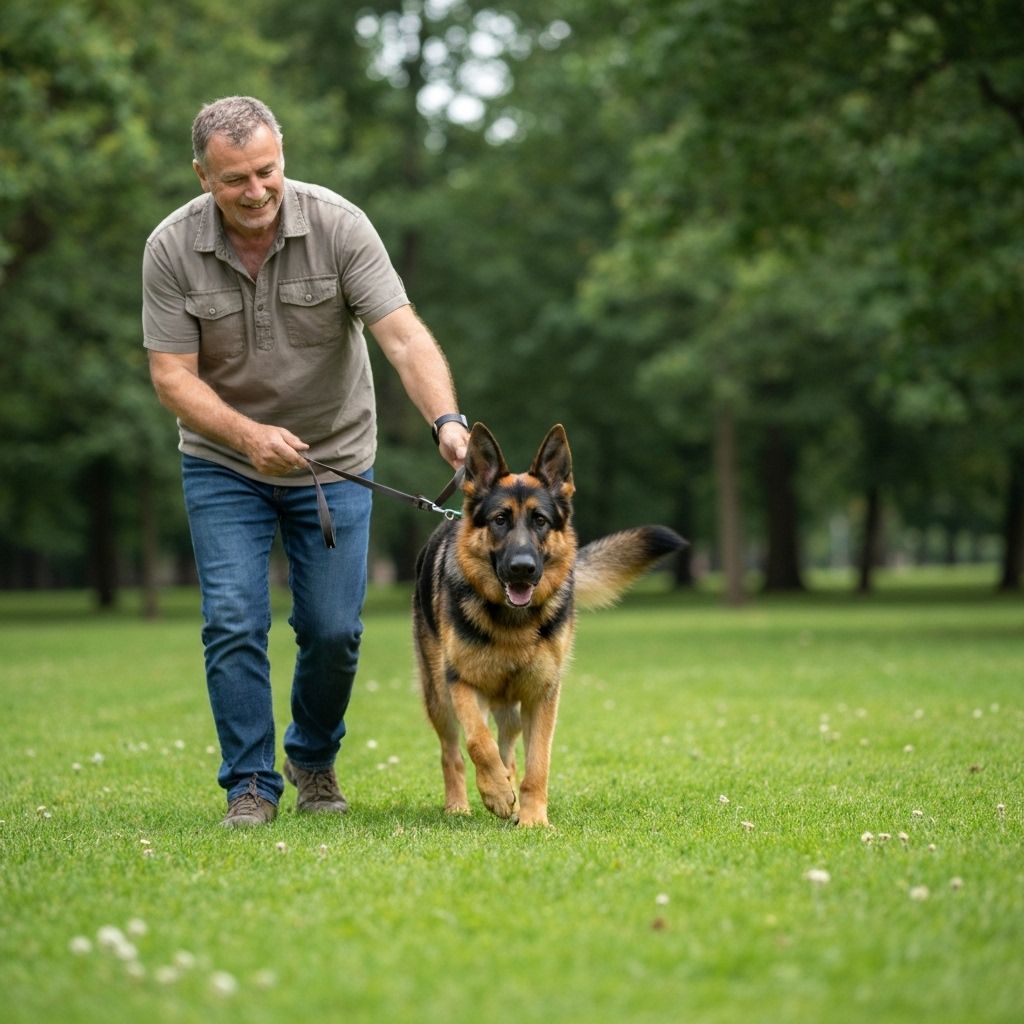
Leash training is one of the most important skills you can teach your German Shepherd. A dog that pulls on the leash makes walks stressful and exhausting for both of you. With the right techniques and consistent practice, you can teach your GSD to walk calmly by your side, making every walk an enjoyable bonding experience.
Why German Shepherds Pull on the Leash
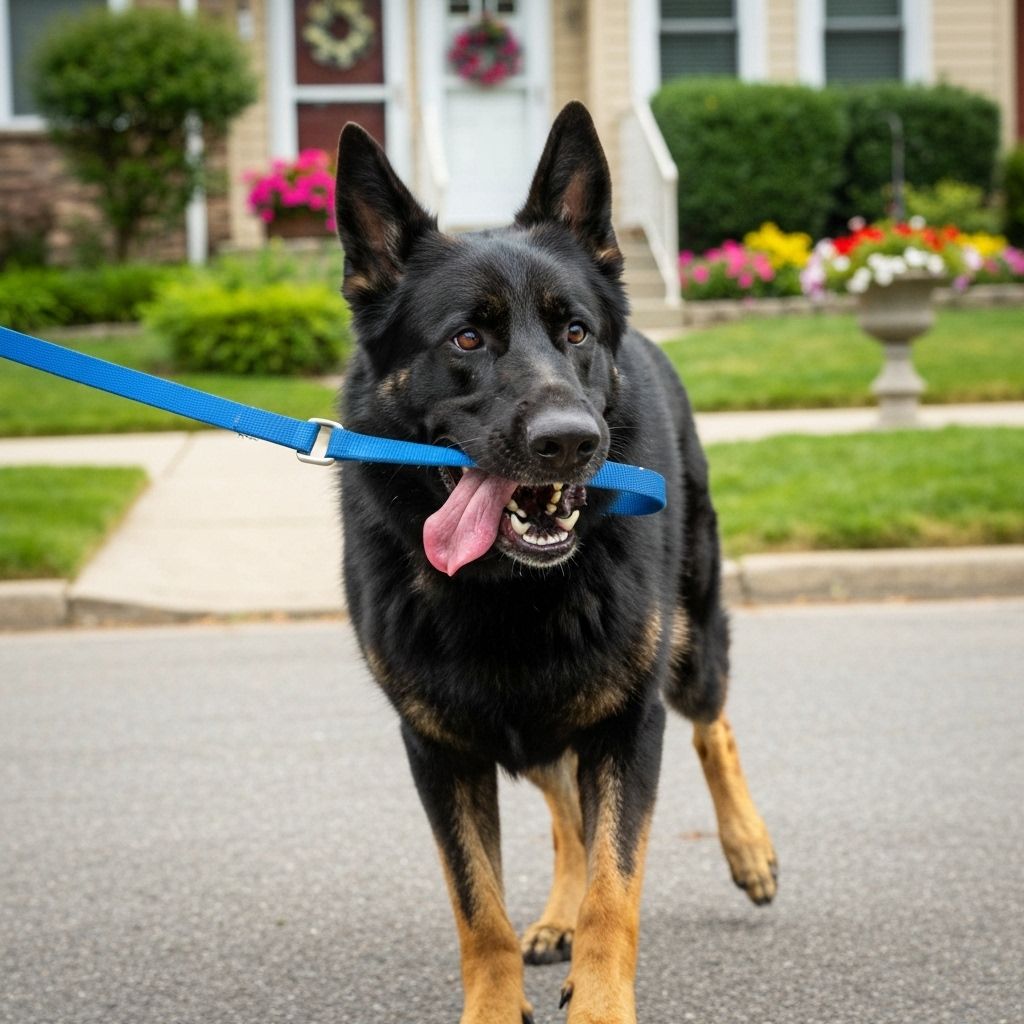
German Shepherds are naturally energetic, curious, and driven dogs. They were bred to work and move with purpose, which means they often want to explore their environment quickly. Pulling on the leash is usually not defiance—it's simply their natural instinct to move forward and investigate.
Common Reasons for Pulling
- •Excitement and Energy: Your GSD is excited to be outside and wants to explore everything
- •Lack of Training: They haven't learned that pulling doesn't get them where they want to go
- •Insufficient Exercise: Pent-up energy makes it harder to maintain self-control
- •Reinforcement History: If pulling has worked in the past, they'll continue doing it
Essential Equipment for Leash Training
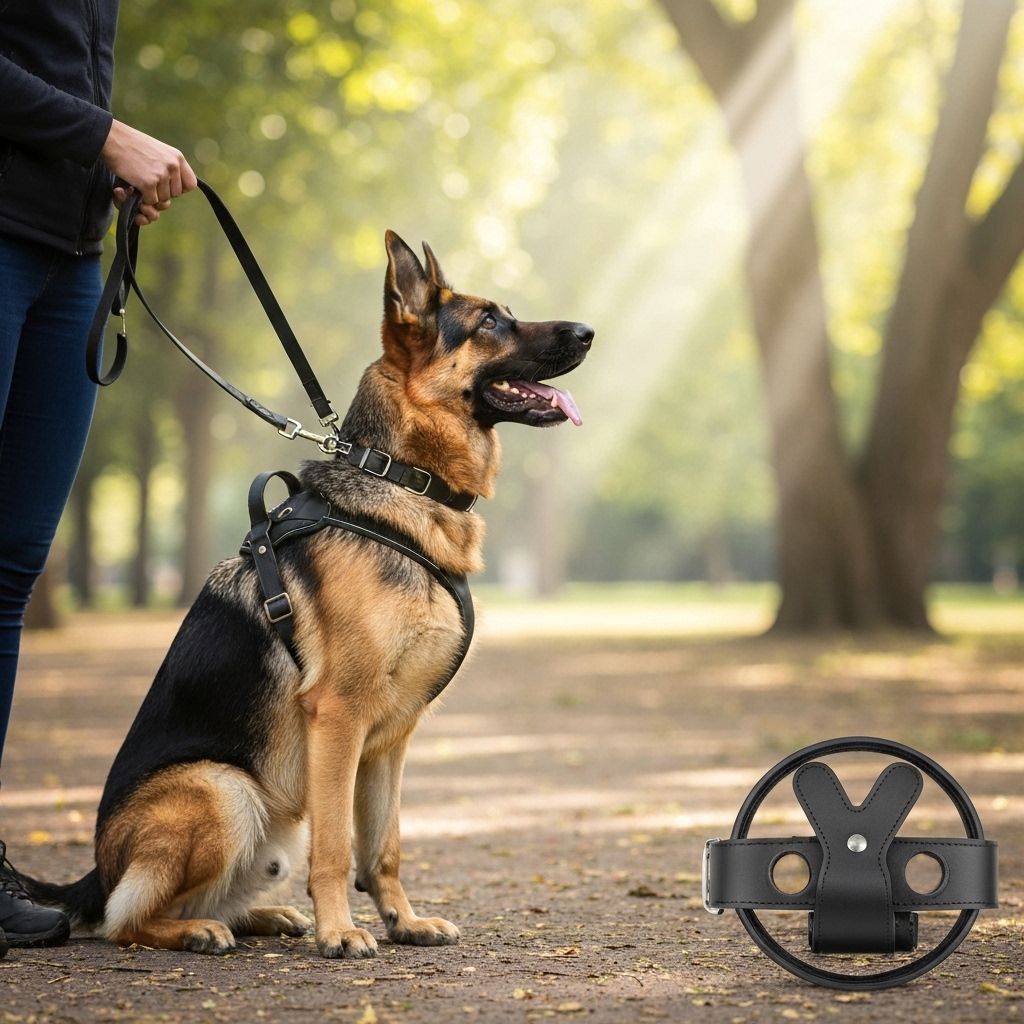
Having the right equipment is crucial for successful leash training. The tools you use can make a significant difference in your training progress and your dog's comfort.
Recommended Equipment
- •6-Foot Standard Leash: Provides good control while allowing some freedom
- •Front-Clip Harness: Reduces pulling by redirecting your dog's forward momentum
- •Treat Pouch: Keeps rewards easily accessible for quick reinforcement
- •High-Value Treats: Small, soft treats that your dog loves
⚠️ Equipment to Avoid
Avoid retractable leashes during training as they teach dogs to pull. Also avoid choke chains or prong collars, which can cause physical harm and damage your relationship with your dog.
Step-by-Step Leash Training Method
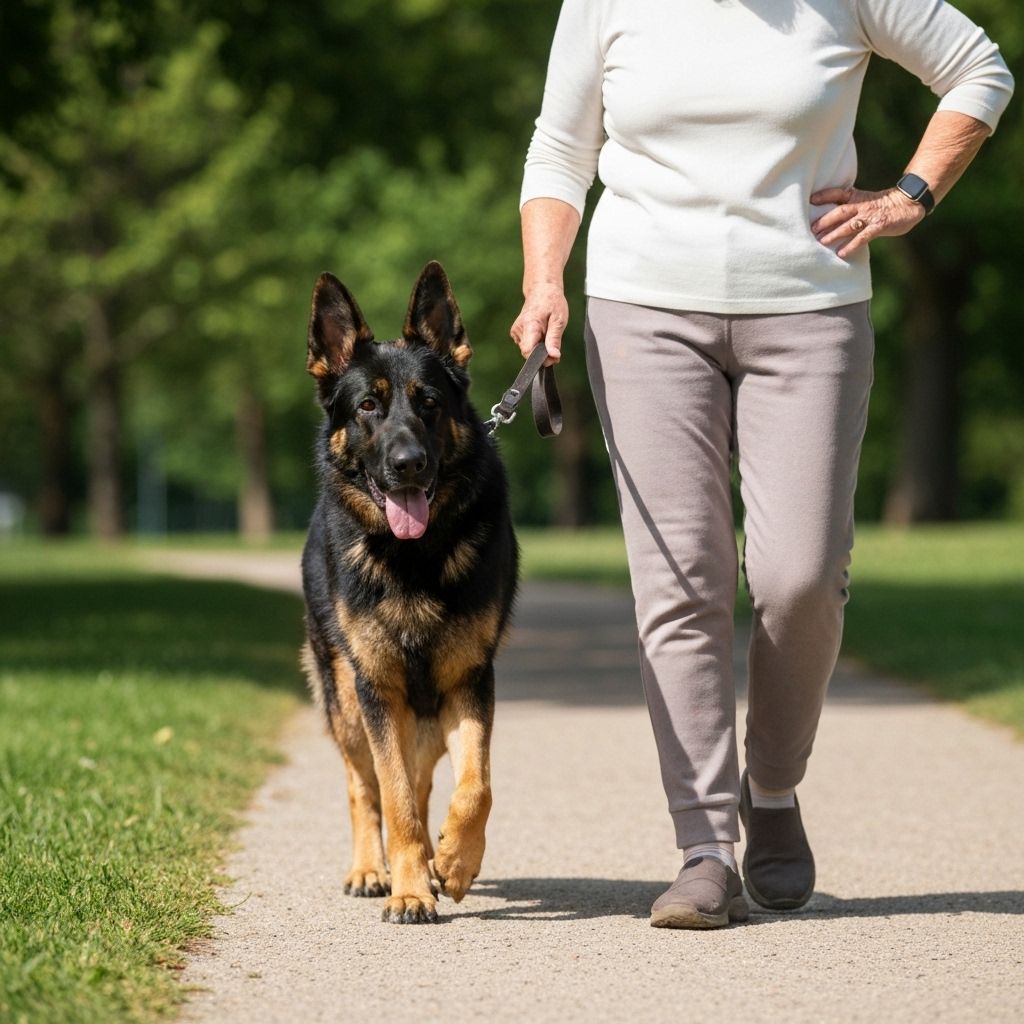
Phase 1: Indoor Foundation (Week 1-2)
Start training indoors where there are minimal distractions. This allows your dog to focus on learning the basics before facing the challenges of the outdoor environment.
- Attach the leash and let your dog wear it around the house for short periods to get comfortable
- Practice attention: Reward your dog with treats when they look at you while on leash
- Take a few steps: Walk a few steps and reward your dog for staying near you
- Gradually increase distance: Slowly walk longer distances indoors, rewarding frequently
Phase 2: The "Stop and Go" Method (Week 3-4)
This is the core technique for teaching loose-leash walking. The principle is simple: pulling gets your dog nowhere, while a loose leash allows forward movement.
- Start walking: Begin in a low-distraction area like your yard or quiet street
- The moment the leash tightens: Stop walking immediately and stand still
- Wait for slack: Don't move until your dog releases tension on the leash
- Reward and continue: When the leash is loose, praise and continue walking
- Be consistent: Repeat this process every single time the leash tightens
Phase 3: Adding Distractions (Week 5-8)
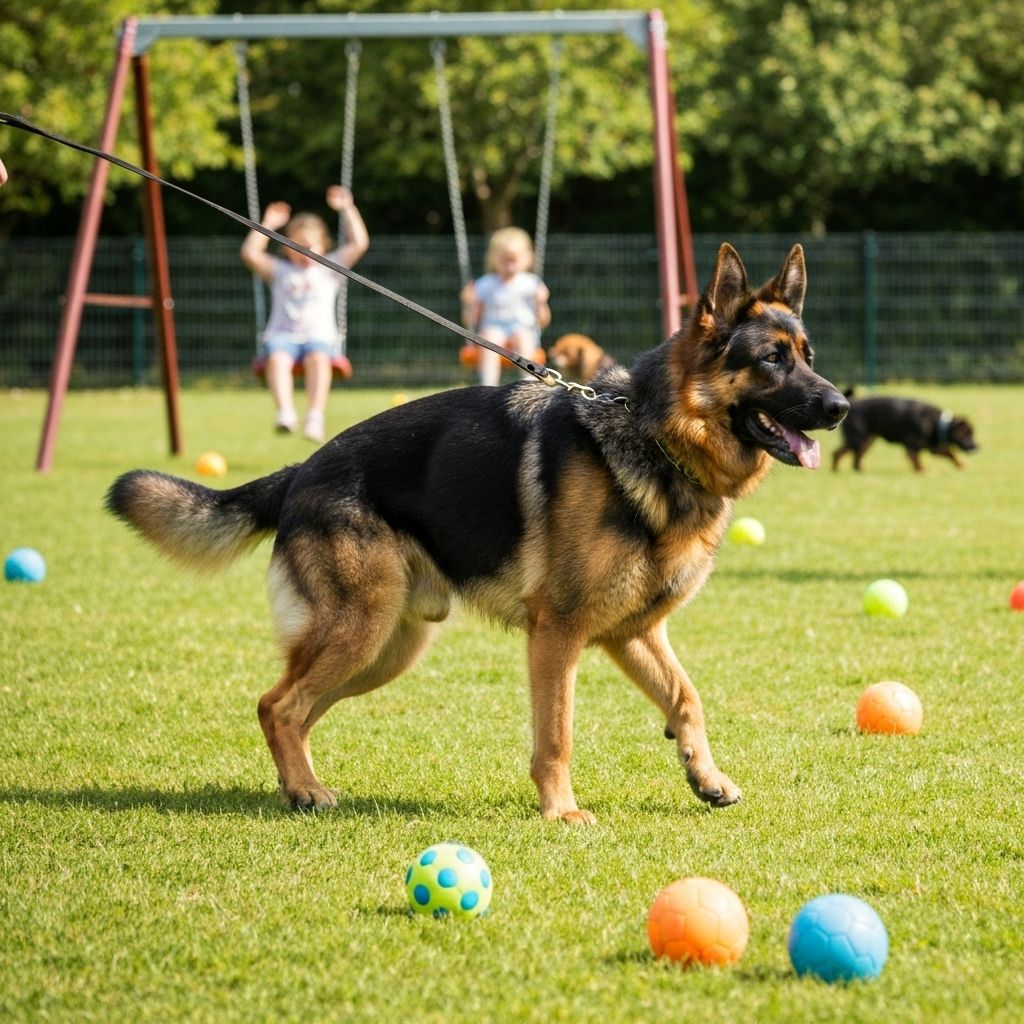
Once your dog is walking well in quiet areas, gradually introduce more challenging environments. This helps generalize the behavior to all situations.
- •Practice in busier areas with more people and dogs (at a distance initially)
- •Use high-value treats when distractions are present
- •Increase distance gradually—don't rush into highly distracting environments
- •Practice "check-ins" where your dog looks at you for guidance
Common Leash Training Mistakes to Avoid
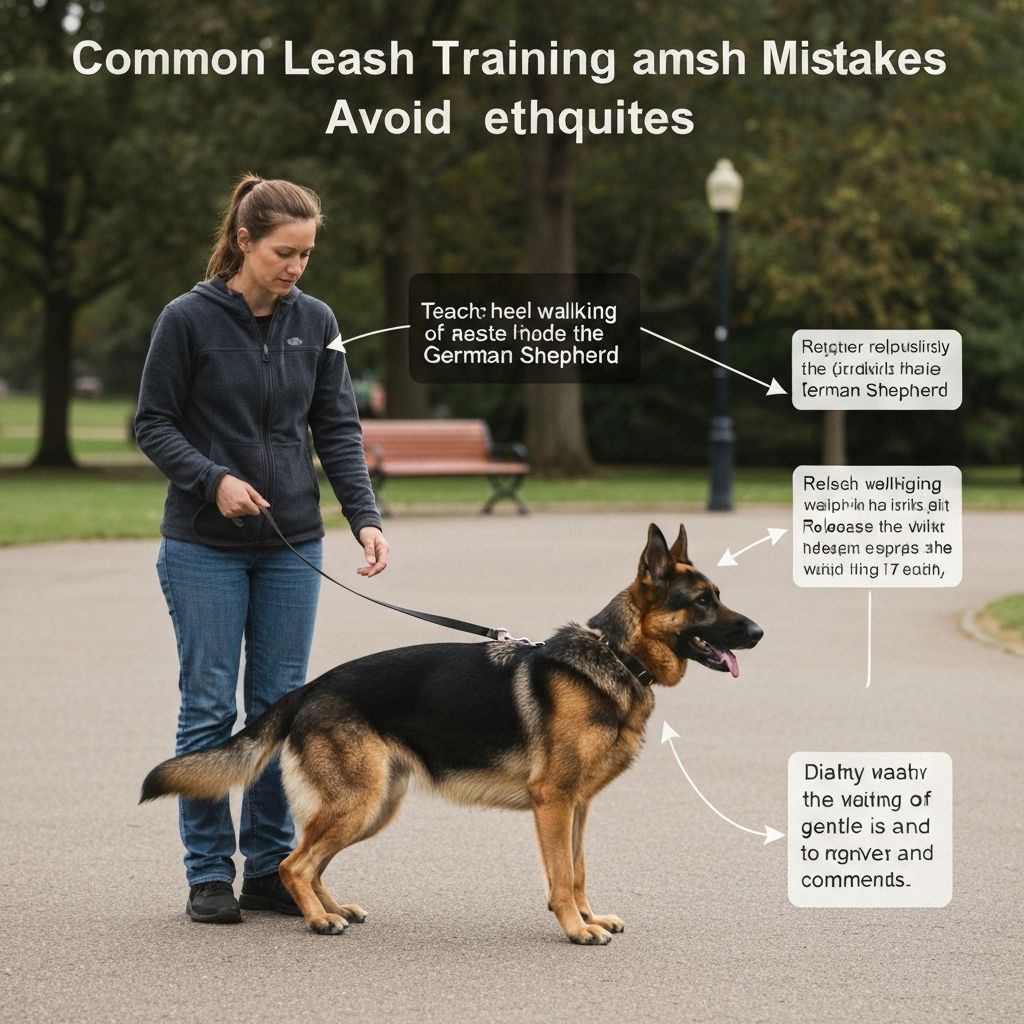
- ✗Inconsistency: Allowing pulling sometimes but not others confuses your dog
- ✗Yanking the leash: This creates tension and can damage your relationship
- ✗Training when tired: Both you and your dog need energy and patience for effective training
- ✗Skipping exercise: A tired dog is easier to train than one with excess energy
- ✗Expecting too much too soon: Leash training takes time and patience
Troubleshooting Specific Leash Problems
Lunging at Other Dogs
If your German Shepherd lunges at other dogs, increase distance and practice the "Look at That" game. Reward your dog for noticing other dogs calmly without reacting. Gradually decrease distance as their behavior improves.
Stopping and Refusing to Move
If your dog plants their feet and won't move, don't drag them. Instead, use treats to lure them forward a few steps, then reward. This could indicate fear or uncertainty, so be patient and build confidence gradually.
Zigzagging and Crossing in Front
Teach your dog a specific side to walk on (usually left) and reward them for staying in position. Use a verbal cue like "heel" or "side" and practice in straight lines before adding turns.
Maintaining Long-Term Success
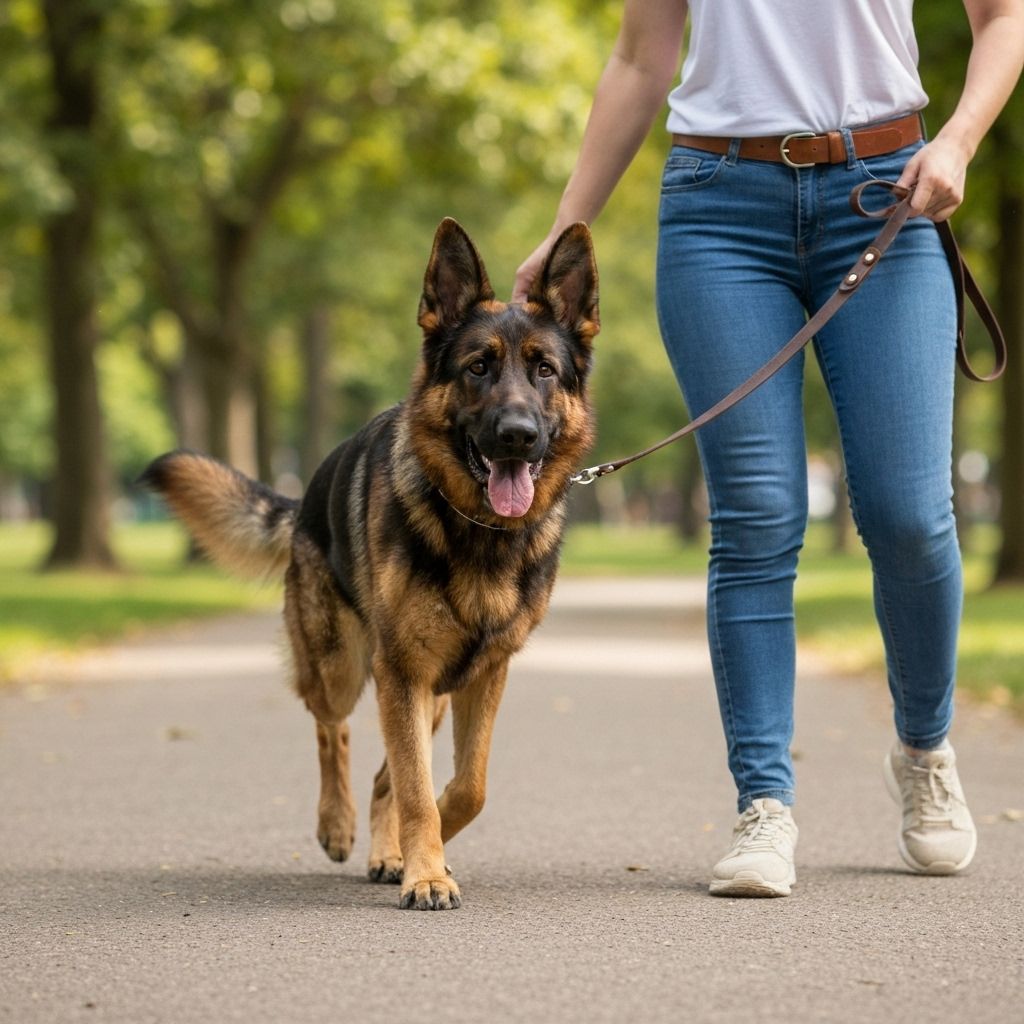
Leash training isn't a one-time achievement—it requires ongoing reinforcement. Even after your German Shepherd has mastered loose-leash walking, continue to reward good behavior occasionally and maintain consistency in your expectations.
Key Takeaways
- ✓Leash training requires patience, consistency, and positive reinforcement
- ✓Start in low-distraction environments and gradually increase difficulty
- ✓Use the "stop and go" method: pulling stops forward progress
- ✓Exercise your dog before training sessions for better focus
- ✓Celebrate small victories and maintain realistic expectations
With dedication and the right approach, your German Shepherd can become a pleasure to walk. Remember that every dog learns at their own pace, so be patient and celebrate progress along the way. The bond you build through positive training will make every walk together more enjoyable.