
Crate Training Made Easy: Complete Guide for German Shepherds
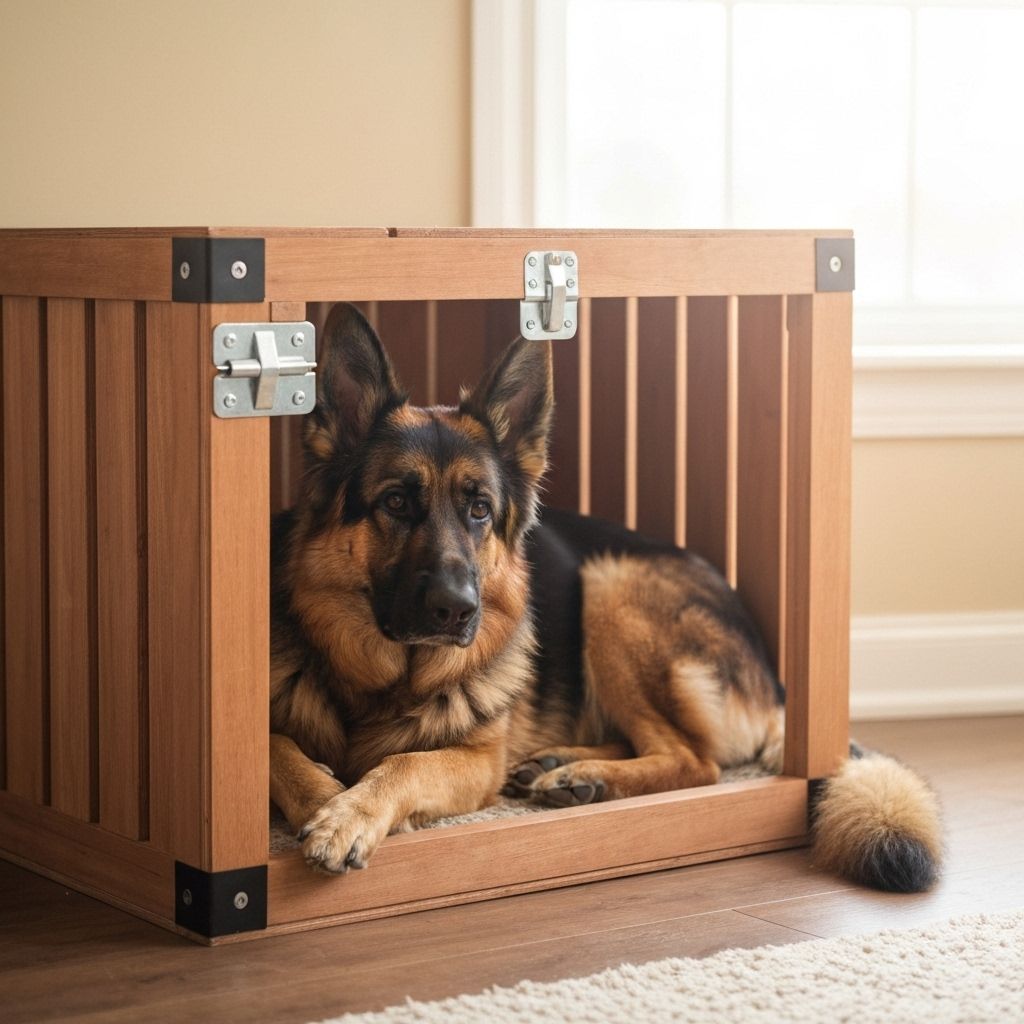
Crate training is one of the most valuable skills you can teach your German Shepherd. When done correctly, a crate becomes your dog's safe haven—a comfortable den where they can relax, sleep, and feel secure. This guide will walk you through the entire process, from choosing the right crate to creating positive associations that last a lifetime.
Why Crate Training Is Important for German Shepherds
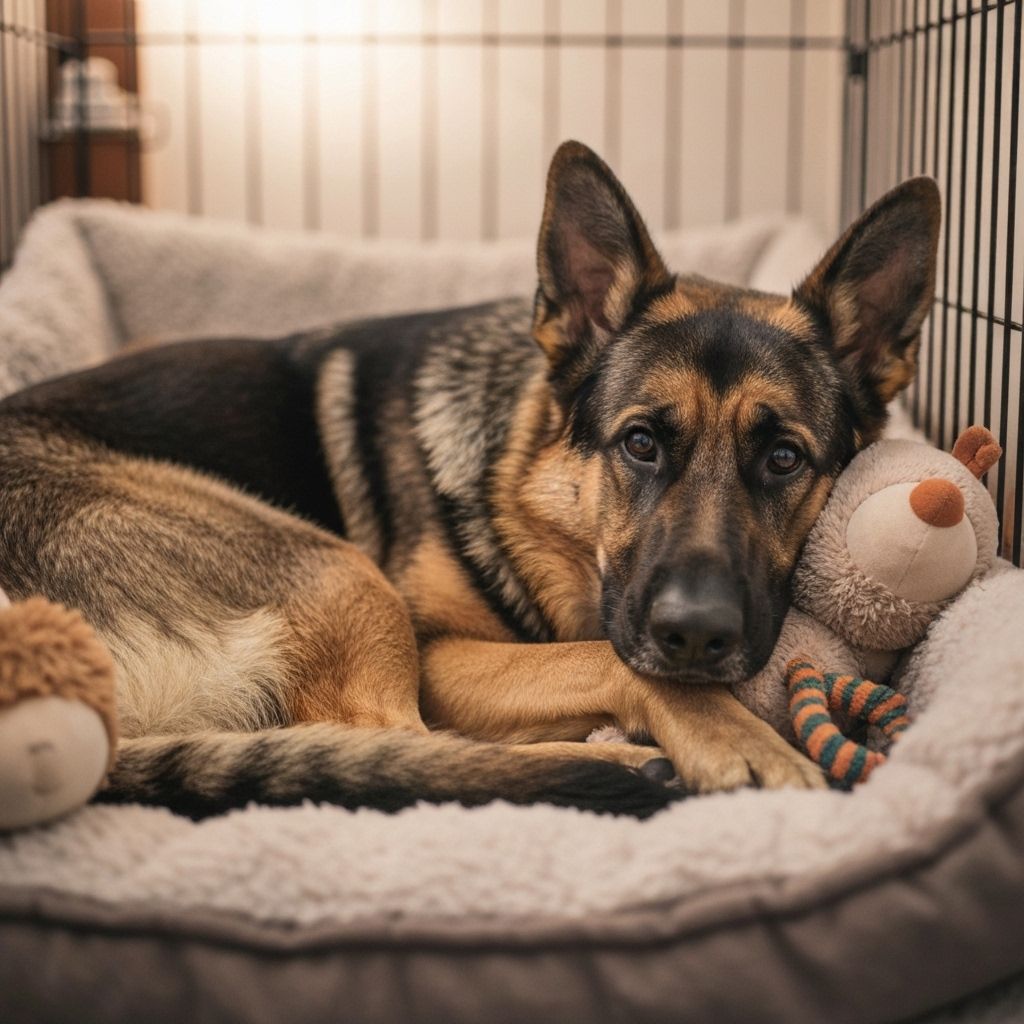
German Shepherds are den animals by nature, meaning they instinctively seek out enclosed spaces where they feel safe. A crate taps into this natural instinct and provides numerous benefits for both you and your dog.
Benefits of Crate Training
- •House Training Aid: Dogs naturally avoid soiling their sleeping area, making crates invaluable for potty training
- •Safe Space: Provides a secure retreat when your dog needs quiet time or feels overwhelmed
- •Travel Safety: Makes car travel safer and reduces stress during vet visits or trips
- •Prevents Destructive Behavior: Keeps your puppy safe and your belongings intact when unsupervised
- •Emergency Preparedness: If your dog ever needs to be confined for medical reasons, they'll already be comfortable
Choosing the Right Crate for Your German Shepherd
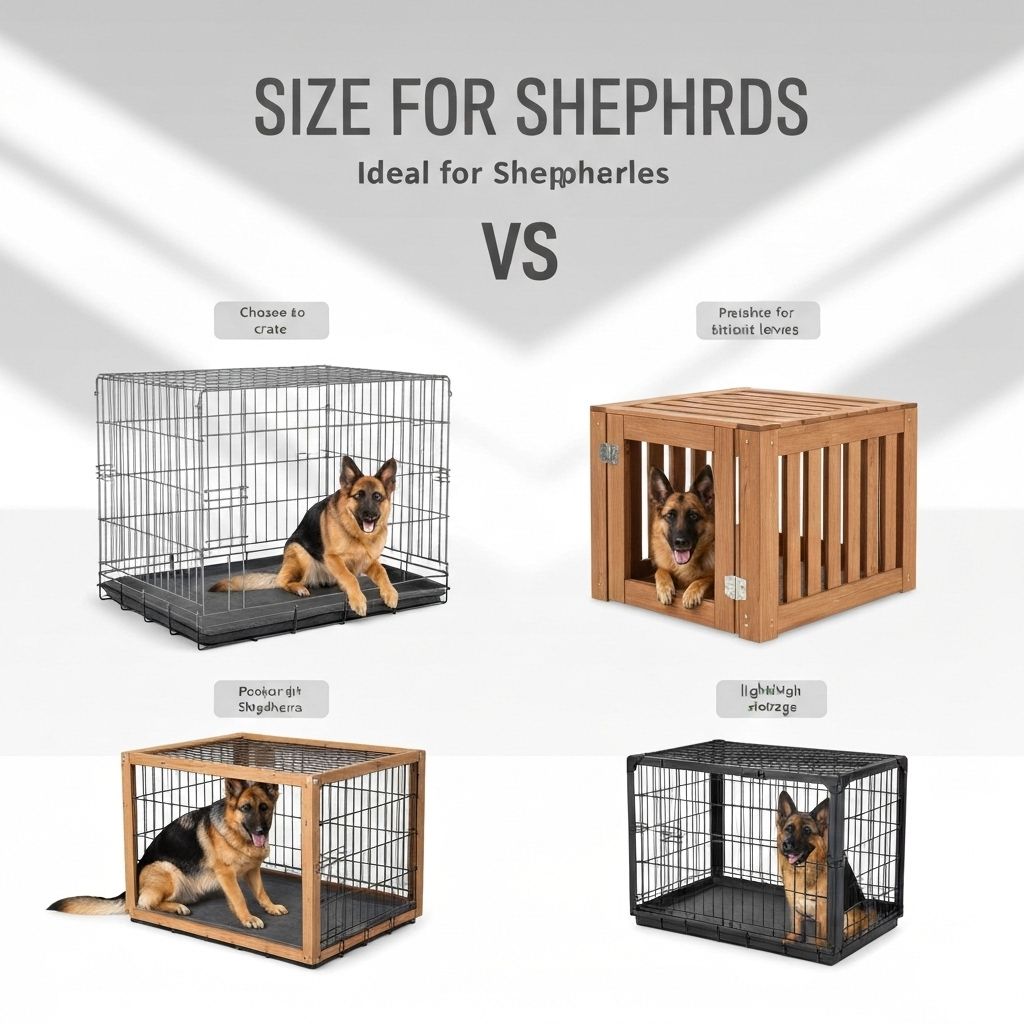
Selecting the appropriate crate is the foundation of successful crate training. The wrong size or type can make training much more difficult and uncomfortable for your dog.
Crate Size Guidelines
Your German Shepherd should be able to stand up without hunching, turn around comfortably, and lie down with legs extended. For adult GSDs, this typically means a crate that's 42-48 inches long.
💡 Pro Tip for Puppies
If you're crate training a puppy, buy an adult-sized crate with a divider panel. This allows you to adjust the space as your puppy grows, preventing them from using one end as a bathroom.
Types of Crates
- •Wire Crates: Most popular option. Provides excellent ventilation, visibility, and folds flat for storage. Can be covered with a blanket for a more den-like feel.
- •Plastic Crates: More enclosed and den-like. Required for airline travel. Good for dogs who prefer more privacy.
- •Soft-Sided Crates: Lightweight and portable but not suitable for puppies or dogs who might chew. Best for well-trained adult dogs.
Step-by-Step Crate Training Process
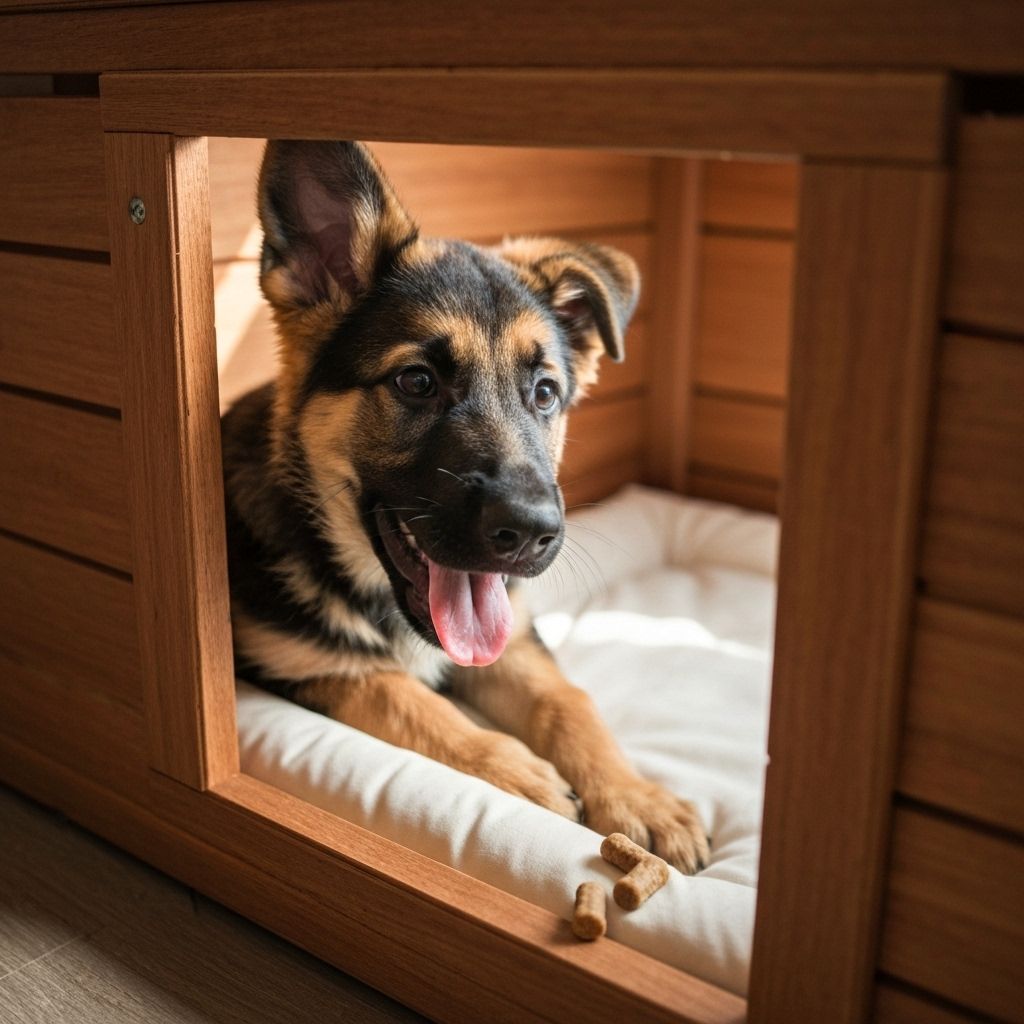
Successful crate training requires patience and a gradual approach. Never force your dog into the crate or use it as punishment. The goal is to create positive associations so your dog chooses to enter willingly.
Phase 1: Introduction (Days 1-3)
- Set up the crate: Place it in a common area where your family spends time, not isolated in a basement or garage
- Make it inviting: Add a comfortable bed or blanket and a few favorite toys
- Leave the door open: Let your dog explore the crate at their own pace
- Toss treats inside: Encourage investigation by throwing treats near and inside the crate
- Feed meals nearby: Place your dog's food bowl near the crate, gradually moving it inside over several meals
Phase 2: Building Duration (Days 4-10)
- Add a cue word: Use a phrase like "crate" or "kennel" as your dog enters
- Close the door briefly: Once your dog is comfortable entering, close the door for a few seconds while you're present
- Gradually increase time: Extend the duration slowly—30 seconds, 1 minute, 2 minutes, etc.
- Stay nearby: Remain in the room during these early sessions
- Reward calm behavior: Give treats and praise for quiet, relaxed behavior in the crate
Phase 3: Increasing Independence (Days 11-21)
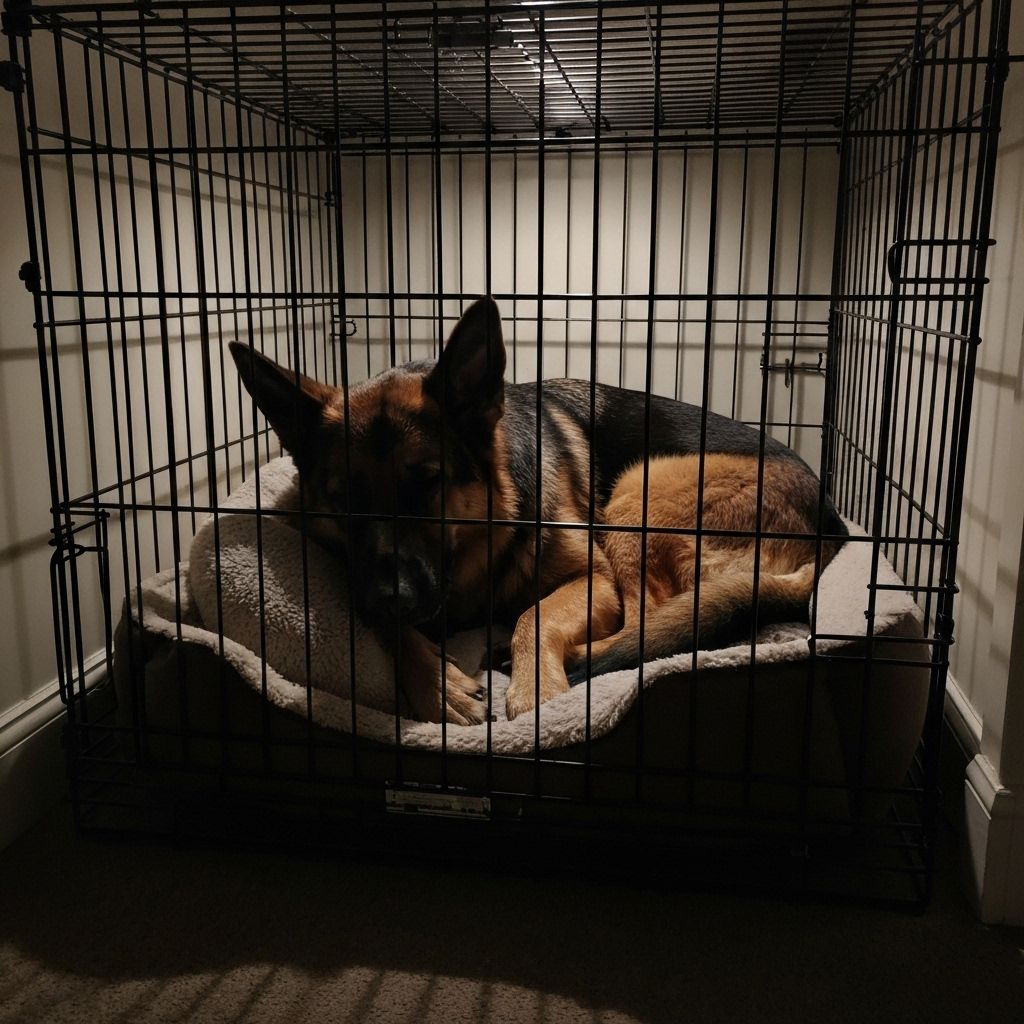
- Leave the room: Once your dog is comfortable for 10-15 minutes, step out of sight briefly
- Practice departures: Put your dog in the crate 5-20 minutes before you leave home
- Vary crating times: Sometimes crate when you're home, sometimes when leaving
- Use for naps: Encourage your dog to nap in the crate during the day
- Nighttime crating: Start having your dog sleep in the crate overnight
Crate Training Schedule for Puppies
Puppies have limited bladder control and cannot be crated for long periods. Use this general guideline based on age:
- 8-10 weeks:30-60 minutes maximum
- 11-14 weeks:1-3 hours maximum
- 15-16 weeks:3-4 hours maximum
- 17+ weeks:4-5 hours maximum (during the day)
⚠️ Important Rule
A general rule of thumb: puppies can hold their bladder for one hour per month of age, plus one. For example, a 3-month-old puppy can typically hold it for about 4 hours maximum.
Common Crate Training Challenges and Solutions
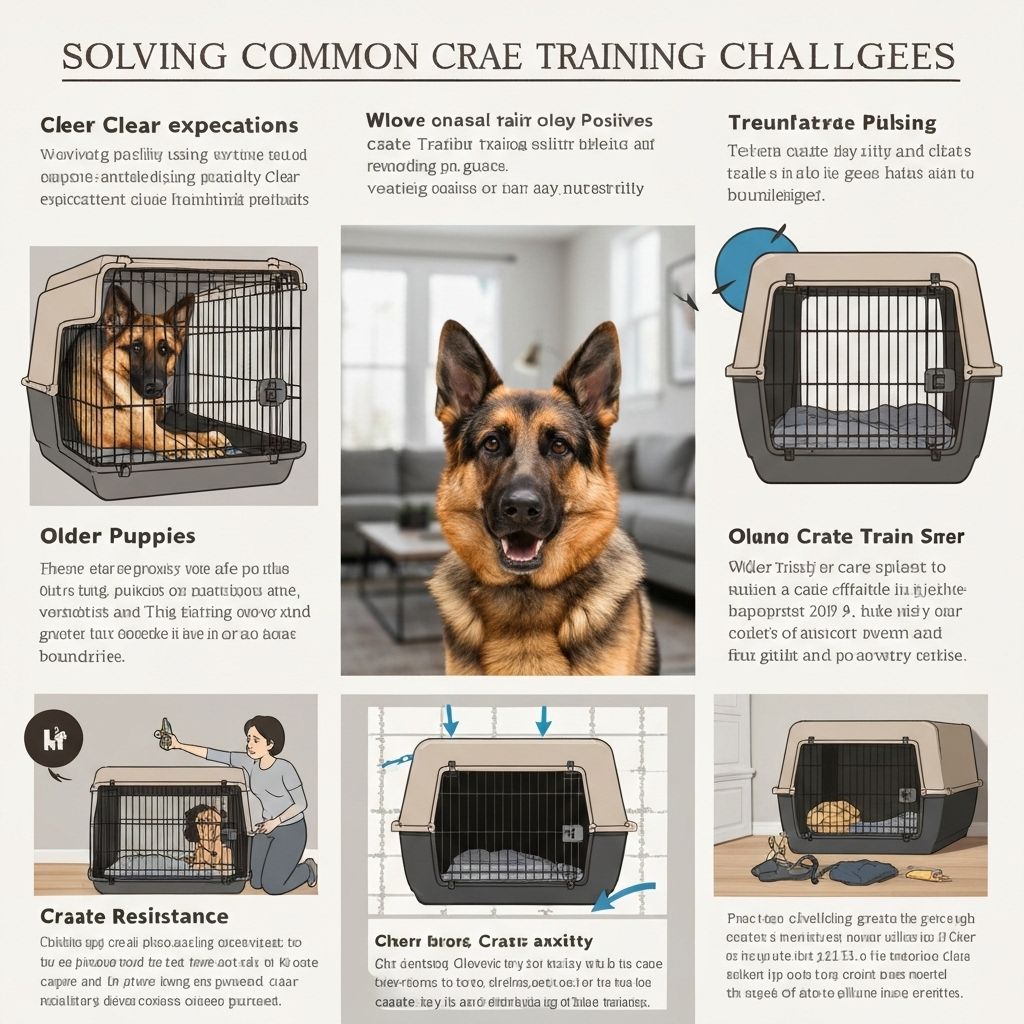
Whining and Crying
Some whining is normal initially. However, don't let your dog out while they're whining, or you'll teach them that whining gets them released. Wait for a moment of quiet, then open the door. If whining persists, you may be progressing too quickly—go back a step.
Refusing to Enter
Never force your dog into the crate. Instead, make it more appealing by feeding all meals inside, using higher-value treats, and ensuring the crate is comfortable. You can also try feeding your dog just outside the crate, then gradually move the bowl deeper inside.
Accidents in the Crate
If your dog is having accidents, the crate may be too large, or you're leaving them crated too long. Ensure you're following the age-appropriate time limits and taking your dog out immediately before and after crating.
Separation Anxiety
If your dog shows signs of severe distress (excessive drooling, destructive behavior, self-harm), they may have separation anxiety. In these cases, consult a professional dog trainer or veterinary behaviorist, as crate training alone won't solve the underlying issue.
Crate Training Do's and Don'ts
✓ Do's
- Make the crate comfortable and inviting
- Use positive reinforcement consistently
- Be patient and progress at your dog's pace
- Exercise your dog before crating
- Keep departures and arrivals low-key
✗ Don'ts
- Never use the crate as punishment
- Don't leave your dog crated too long
- Don't force your dog into the crate
- Don't let your dog out while whining
- Don't rush the training process
Transitioning to Freedom
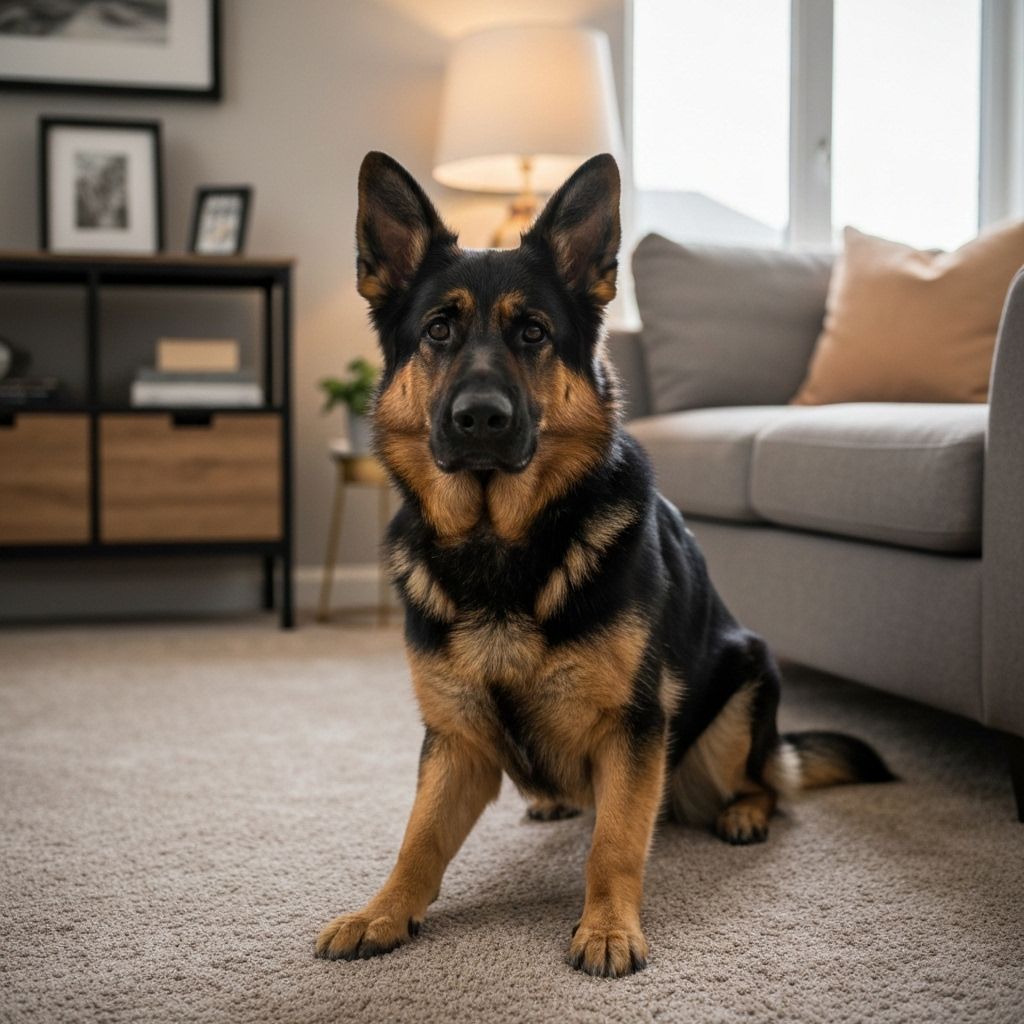
Once your German Shepherd is fully house-trained and past the destructive puppy stage (usually around 1-2 years old), you can gradually give them more freedom. Start by leaving them in a small, dog-proofed area for short periods, then slowly expand their access as they prove trustworthy.
However, many dogs continue to use their crate voluntarily throughout their lives as a comfortable resting spot. Keep the crate available even after your dog has earned house freedom.
Key Takeaways
- ✓Crate training taps into your dog's natural den instinct
- ✓Choose the right size crate—your dog should be able to stand, turn, and lie down comfortably
- ✓Progress gradually through introduction, duration building, and independence phases
- ✓Never use the crate as punishment or leave puppies crated too long
- ✓Patience and positive reinforcement are essential for success
Crate training is an investment in your German Shepherd's safety, security, and your peace of mind. When done correctly, your dog will view their crate as a beloved personal space—a cozy retreat where they can relax and feel safe. Take your time, stay positive, and celebrate each small success along the way.